「あなたには家族がいますか?」
“Do you have any family?”
“As-tu de la famille ?”
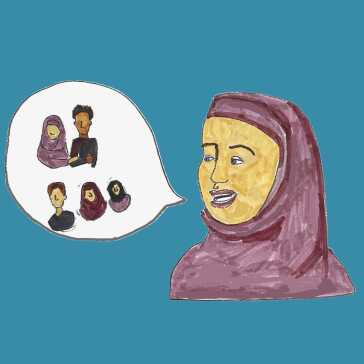
「はい、私と夫には娘がふたり、息子がひとりいます」
“Yes, my husband and I have two daughters and a son.”
“Oui, mon mari et moi avons deux filles et un fils.”
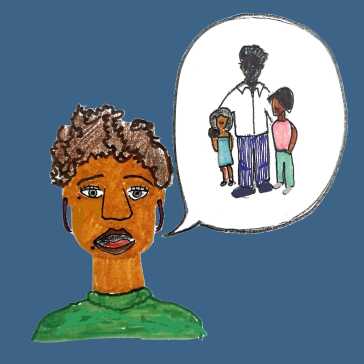
「私にもふたりの娘がいますが、夫とは別れました」
“I also have two daughters, but I’m divorced.”
“J’ai aussi deux filles, mais je suis divorcé.”
「娘さんたちは、おいくつですか?」
“How old are your daughters?”
“Quel âge ont tes filles ?”
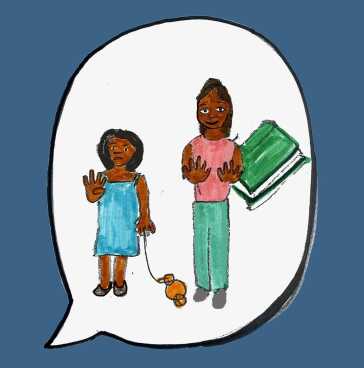
「ミナは4歳です。ようちえんに通っています。ミリアムは10歳で、学校に通っています」
“Mina is four years old. She goes to preschool. Miriam is ten, so she goes to school.”
“Mina a quatre ans. Elle est en maternelle. Miriam a dix ans, donc elle va à l’école primaire.”
「私の子どもたちはみんな学校に通っています。息子は来年、卒業します」
“All of my children are in school. My son will graduate next year.”
“Tous mes enfants sont à l’école. Mon fils va avoir son diplôme l’année prochaine.”
「おめでとうございます!子どもたちの成長はとても早いですね。息子さんは卒業したあとに、何をしたいのですか?」
“That is great! They grow up so fast. What does he want to do afterwards?”
“C’est super ! Ils grandissent si vite. Qu’est-ce qu’il veut faire après ?”
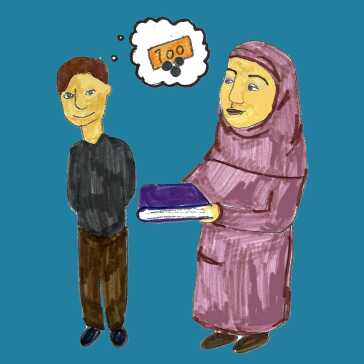
「息子は働こうと考えていますが、私は息子に、大学に進学したほうがいいと伝えています」
“He wants to get a job, but I tell him he should go to university instead.”
“Il veut travailler, mais je lui dis qu’il devrait plutôt aller à l’université.”
「いい考えですね。私も子どもたちには、いつか大学で学んでほしいと思っています」
“That’s a good idea. I also hope my children will go to university someday.”
“C’est une bonne idée. J’espère aussi que mes enfants iront à l’université un jour.”